
Spanish Bilingual Immersion Program
What is a Bilingual Immersion Program?
Newlands Primary School is Australia’s only Spanish–bilingual primary school, and we are proud to be part of the Department’s Bilingual Schools Network and the International Spanish Academies program. At NPS, Literacy and Numeracy are delivered in both English and Spanish. Students at NPS receive five hours of Spanish Literacy and 3 hours of Spanish Numeracy. The bilingual approach we use is immersion, where students are immersed in the Spanish language through targeted, explicit teaching in engaging, real-life learning contexts. This approach fosters rapid acquisition of vocabulary and facilitates students’ ability to respond effectively in the target language.
What does learning look like at NPS?
At NPS, Spanish teachers deliver content 100% in Spanish. Our teaching methods encompass a variety of bilingual strategies, including CLIL (Content and Language Integrated Learning) and TPRS (Teaching Proficiency through Reading and Storytelling), as well as TPR (Total Physical Response). These methods not only promote language proficiency but also enhance students’ understanding of subject matter across disciplines.
In our bilingual program, both English and Spanish classroom teachers collaborate closely to ensure coverage of the Victorian curriculum while actively seeking out cross-linguistic connections. This integrated approach enables students to develop fluency in both languages while gaining a deeper understanding of diverse academic concepts and cultural perspectives.
Benefits of Bilingual Education
Bilingual education has been shown to have many benefits for students and school communities. Students who undertake bilingual education have been shown to perform at above average levels on English and Mathematics. It also leads to increased understanding and appreciation of cultural diversity.
The Research

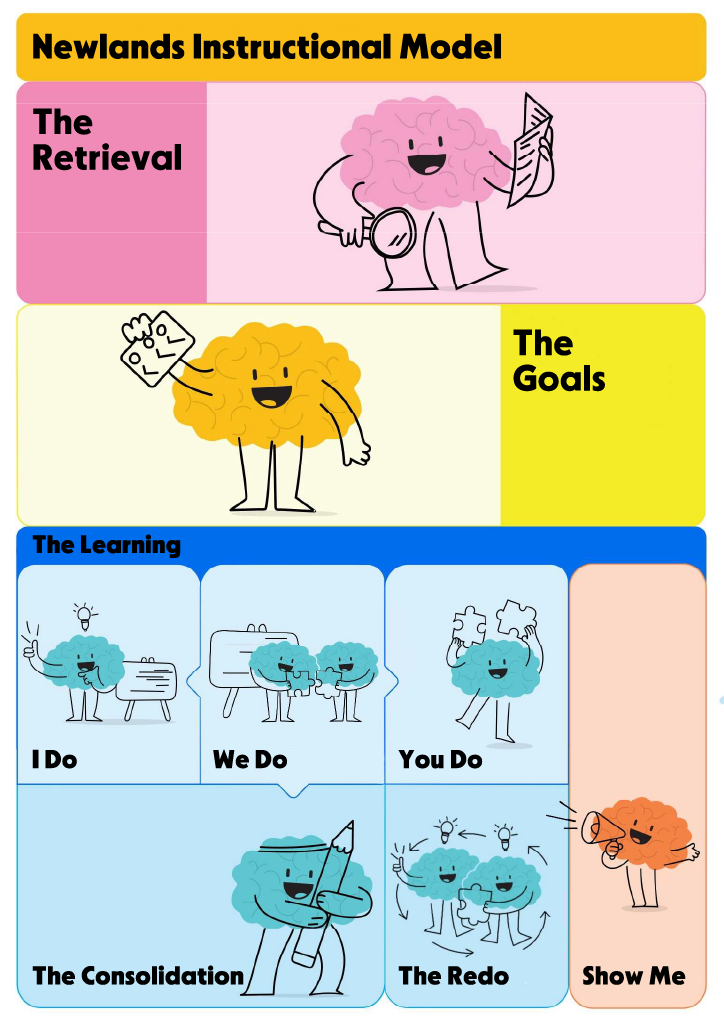
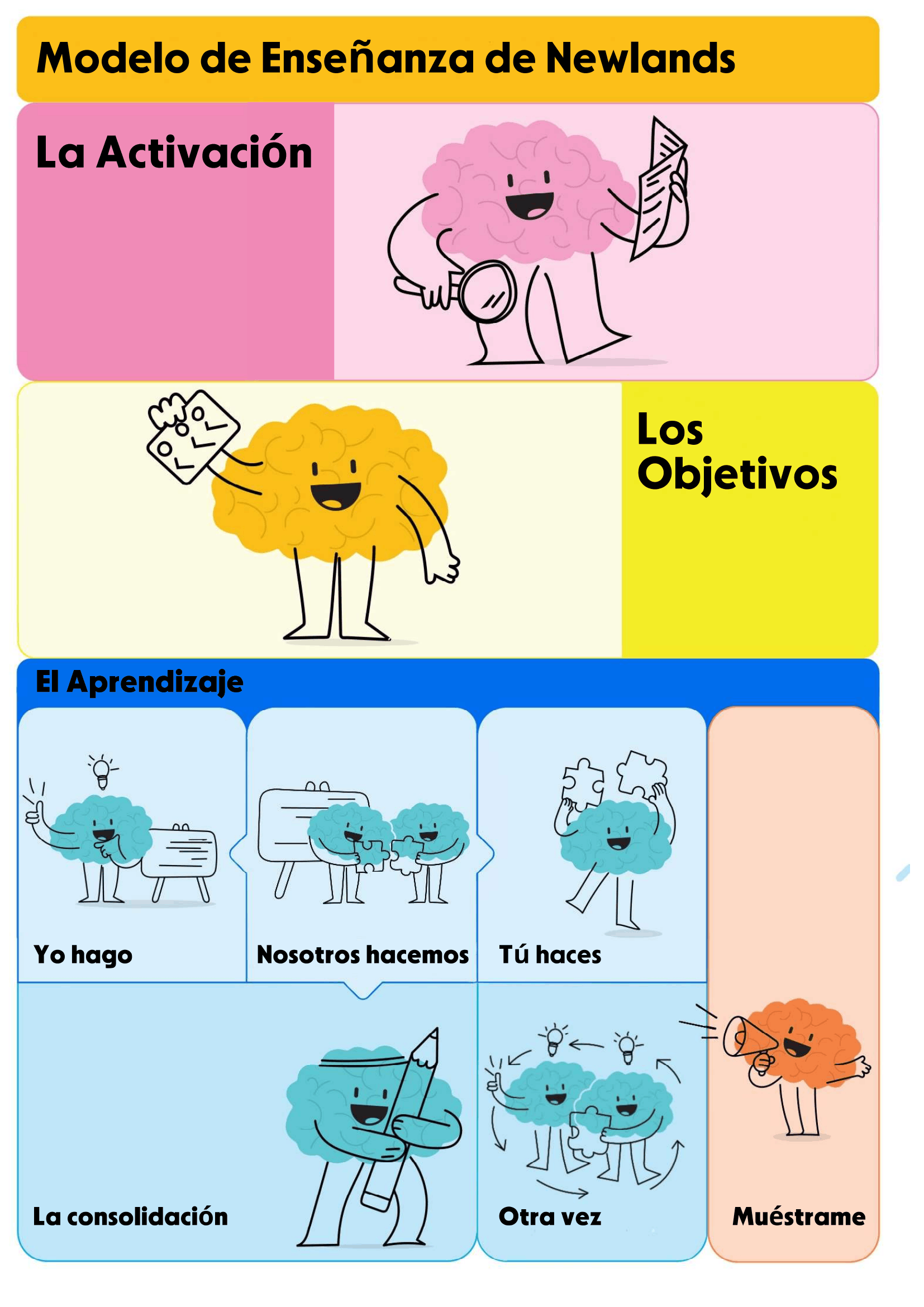
Our instructional model is a structured framework that guides the design and delivery of educational instruction. It outlines the sequence of steps, strategies, and resources needed to facilitate learning effectively. By providing a explicit approach, instructional models help educators create engaging and impactful learning experiences for students.
Literacy at Newlands Primary School
English Literacy at Newlands Primary School
Our approach to Reading draws on the theory behind the Science of Reading and combines this with our keystones to design learning experiences that align with our philosophy to teaching and learning. We focus on developing students’ ability to decode the English language and lift words off the page alongside developing language comprehension to support our students to reach the ultimate goal of reading, comprehension.
Reading lessons follows a systematic, synthetic phonics approach in our F-2 program, where students systematically develop their knowledge of phoneme-grapheme relationships. They then apply this knowledge to blend known sounds when reading decodable texts. Across all year levels, we develop comprehension through content building and through ‘Questioning the Author’ . The development of fluency is integrated throughout Reading lessons.
Our Reading program is supported by The Code. The Code develops students’ phonics skills and, morphology and etymology knowledge to support spelling and reading. In F-2, The Code also supports students to develop their phonological awareness, as they learn to identify initial, middle and final sounds, blend and segment sounds and syllables, substitute and delete sounds in words and identify rhyming words.
Our approach to Writing draws on theory from the The Writing Revolution. Our grammar lessons provide skills that support students’ writing through the development of sentence fluency and word choice, whilst our writing lessons applies the writing process to support a genre based writing approach.
Spanish Literacy at Newlands Primary School
Our approach to Spanish literacy encompasses the essential language skills involved in learning a second language: speaking and listening, reading and writing. We use mentor texts as a cornerstone to develop vocabulary, oral language, and Spanish grammar. These mentor texts are differentiated to ensure all students learning needs are met. These texts follow our writing genre-based approach. Our aim is to enhance students’ vocabulary through multiple exposures to these mentor texts while simultaneously teaching reading and writing skills explicitly.
Our reading approach draws on the ‘Big Six of reading’ as essential elements for creating effective learning experiences. During the early years, students learn Spanish letter-sound associations, beginning with the vowels and selected consonants that are consistent in both Spanish and English, followed by the formation of syllables. They then move on to learn the letter-sound correspondences that are unique to the Spanish language. Across all years, students develop literal and inferential comprehension, as well as language comprehension strategies such as the use of cognates, contextual clues, and images to understand the meaning of unknown words. Fluency is explicitly taught and integrated throughout our reading lessons.
Similar to our approach in English literacy, our approach to Spanish writing draws on the theory behind “The Writing Revolution” and the “6+1 Traits,” adjusted to the Spanish language. Our writing lessons have a genre-based approach where students learn the different stages of the writing process while being exposed to new vocabulary and sentence structures through our mentor texts. Spanish grammar lessons provide support and skills that students apply during our writing lessons.
Numeracy at Newlands Primary School
At Newlands Primary School, Mathematics is delivered bilingually, with students receiving three hours of instruction in English and three hours in Spanish each week as part of Tier 1 teaching. This approach ensures equitable exposure to mathematical concepts in both languages, reinforcing the school’s commitment to a bilingual curriculum.
Teaching teams collaboratively design unit rubrics structured around the four mathematical proficiencies: Understanding, Fluency, Problem-Solving, and Reasoning. These rubrics enable teachers to monitor and evaluate the effectiveness of their instruction, identifying strengths and areas for improvement. Detailed student assessments further support this process, allowing teachers to address individual learning needs and inform Tier 2 interventions.
The Facts on Fire initiative is a daily routine aimed at building automaticity with number facts. Guided by the school’s comprehensive number fact scope and sequence, students work toward personalised goals. This consistent practice strengthens foundational numeracy skills across all year levels.
Daily Reviews are conducted in both English and Spanish, systematically revisiting previous content, concepts, and terminology to reinforce students’ short-term and long-term memory. This strategy provides multiple exposures to key ideas, gradually building students’ confidence and mastery.
Specialist Learning Programs

Steam

Music

SPort

Art

Art2

Music2

Athletics
Empty Toggle - Closed by default CSS
Visual Arts
All students attend a weekly art lesson. Our talented art teacher runs an exciting and well planned program. We hold a school art show every second year.
STEAM
Science, Technology, Engineering, Arts and Mathematics.
This section is currently under review.
Performing Arts & Music
Our Performing Arts program focuses on three key areas; Drama, Dance and Music. Each grade participates in a 60-minute session of Dance and Drama, and a 60-minute Music session. This allows us to develop and build upon student’s skills in Dance, Music and Drama consistently throughout the year. We also offer a range of extra curricular programs that support our Performing Arts Program including; School Rock Band, Performance Group, Dance Clubs and the School Choir. We are lucky enough to have access to a large multi-purpose room as well as an instrumental music room.
Health & Physical Education
Health and Physical Education at Newlands Primary School is focused on supporting students to build the knowledge, skills and confidence to lead active, healthy and connected lives. Our program develops the whole child by combining physical activity with learning about wellbeing, relationships and personal growth.
Through a wide range of movement experiences, games and sports, students develop fundamental movement skills, apply strategies, and learn how to work collaboratively with others. They are encouraged to demonstrate fair play, inclusion and respect in all learning contexts. Alongside this, students explore how to make safe and positive choices that enhance their own health and the wellbeing of others in the community.
Learning in HPE is active, engaging and student-centred. Lessons often begin with a game or challenge and build towards applying skills in more complex and game-like situations.
Overall, our aim is for students to leave HPE with the skills, understanding and motivation to be active participants in their own health, wellbeing and lifelong physical activity.
Wellbeing
Philosophy
-
the thinking skills needed for life (and philosophy), especially critical thinking, creative thinking, and empathetic thinking;
-
students’ capacity to engage in meaningful dialogue, approaching differences with curiosity and respect; and
-
a co-created common understanding of key concepts such as fairness, sharing, friendship, and power.
Library
Students are provided with an opportunity to borrow books from the school library each week. They can also visit the library on selected days at lunchtime and after school to return and borrow books. We are fortunate to have a dedicated trained librarian that ensures all of the resources are refreshed and maintained and up to date.
Teaching staff are regular lunchtime visitors to the library to read stories to the children.
If you wish to search the Library catalogue, please click here.
Library
Students are provided with an opportunity to borrow books from the school library each week. They can also visit the library on selected days at lunchtime to return and borrow books. We are fortunate to have a dedicated librarian that ensures all of the resources are refreshed and maintained and up to date.
Teaching staff are regular lunchtime visitors to the library to read stories to the children.
If you wish to search the Library catalogue, please click here.
To make any Bookclub orders, please follow this link:
In Grades 5 & 6, students assume over 40 leadership roles, encompassing positions such as school leaders, house leaders, correspondent leaders, art leaders, performing arts, Spanish, Assembly, ICT, Sport, Wellbeing, STEAM, Library, and Environmental leaders. Towards the end of the preceding year, students engage in one-on-one interviews with teachers, where they are questioned about their understanding of leadership, alignment with school values, and interest in leadership roles.
Successful candidates then participate in monthly meetings with a designated mentor teacher, during which discussions are documented regarding their observations, set goals, and progress toward achieving those goals. These student leaders convene twice per term at the Student Congregation, where they deliberate on their objectives.
Subsequently, the outcomes of these discussions are presented by our school leaders at School Council meetings.
The Student Representative Council (SRC)
The SRC consists of a voted delegate from each double class, spanning from Foundation through to Grade six. It serves as a platform for students to nurture their leadership, communication, and self-management abilities. Students apply for positions on the council at the start of the academic year.
Through the SRC, students have the opportunity to offer input to staff, advocate for student perspectives, and foster a sense of belonging. They deliberate on various significant matters, such as organizing fundraisers at the end of each term, and propose ideas for enhancing school operations.

Lunchtime Clubs at Newlands Primary School
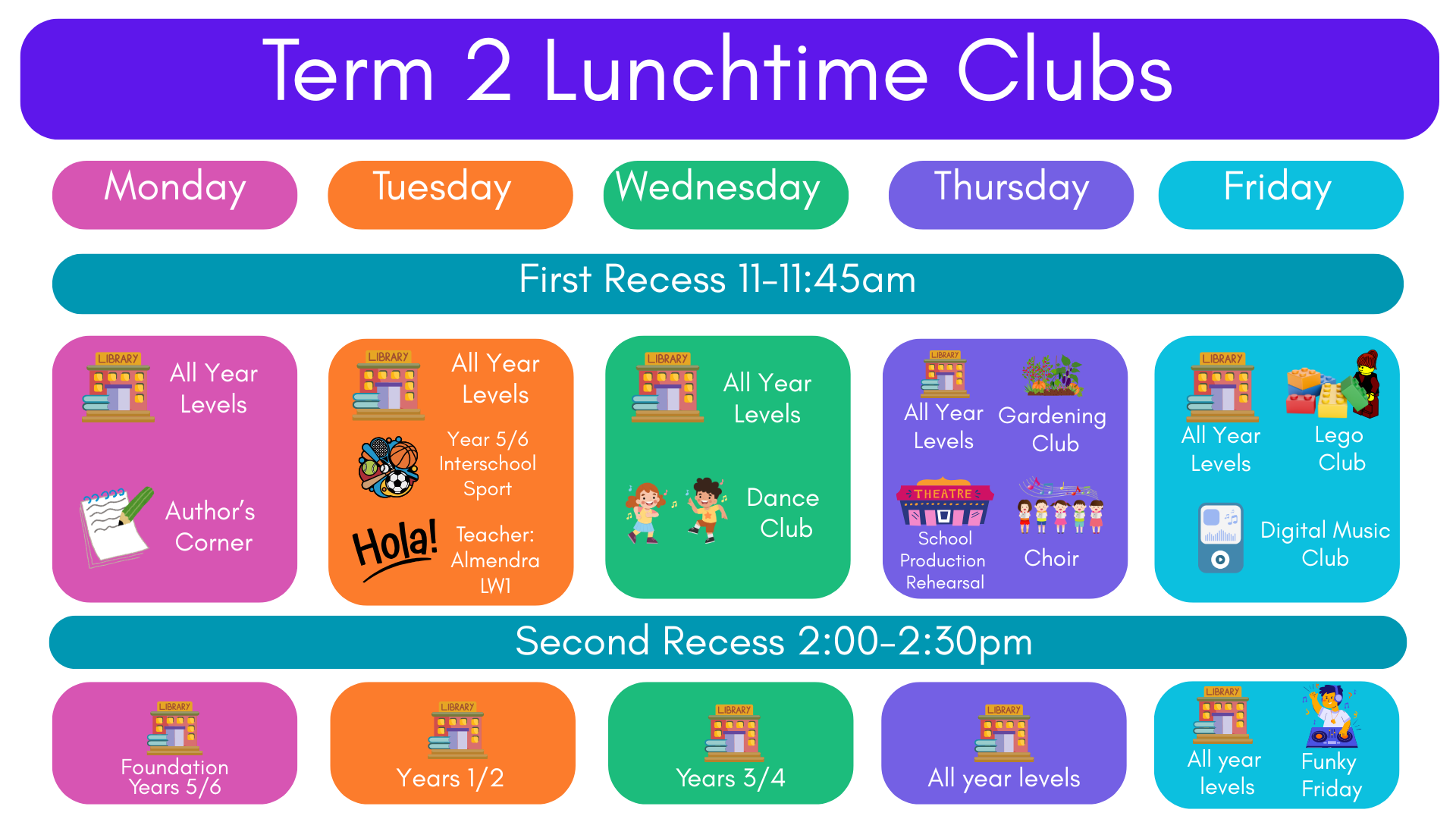
Newlands offers an array of Lunchtime Clubs tailored to cater to student interests, with guidance from both teachers and Student Leaders. These clubs are meticulously designed to engage students across different age groups and interests, fostering an environment that extends beyond the standard curriculum.
Lunchtime Clubs are communicated with families are the commencement of each term in the school newsletter. Timetables are on display in each of our classrooms and announcements are put over the PA each lunchtime, communicating clubs that are available for students.
ICT at Newlands Primary School

Seesaw - Foundation to Year 6
Seesaw is utilised across all year levels as a digital portfolio for student learning, encompassing assessment and educational tasks.
At School:
Teachers upload evidence of student learning onto Seesaw.
Students in Years 3 – 6 receive and complete lesson tasks through Seesaw. Additionally, students in these year levels are encouraged to share their own work on Seesaw.
Student Use at Home:
Students have the option to continue completing Seesaw learning tasks at home. While not mandatory, teachers may occasionally request students to do so.
Parent/Carer Engagement:
Parents/Carers can actively participate in their child’s learning by accessing Seesaw through a family account. They can provide feedback on their child’s learning and assessments, as well as engage with and acknowledge their child’s work by ‘liking’ it.
Essential Assessment - Year 1 to Year 6

Essential Assessment serves as a tool for assessing students’ learning in Reading and Mathematics, with the results informing the teaching program and individual learning objectives.
At School:
Students undertake designated assessments during class time. Within the Mathematics Builders Program, students pursue their personalised learning goals through assigned tasks.
Student Use at Home:
Students have the opportunity to extend their learning by completing assigned tasks at home. Supplementary resources such as videos and explanations are provided to aid comprehension.
Parent/Carer Engagement:
Parents/Carers can support their child’s learning by accessing the platform as the student. In the event of task completion, classroom teachers may assign additional activities for further engagement.
Nessy - Foundation to Year 6
Nessy serves as a tool for students to practise Spelling and Reading, through a systematic, synthetic phonics approach.
At school:
Students undertake a placement test when they first sign in to Nessy. Students pursue their personalised learning goals through tasks.
Student use at home:
Students have the opportunity to extend their reading and spelling practise by accessing and engaging with Nessy tasks at home.
Parent/Carer engagement:
Parents/Carers can aid their child’s learning by providing support whilst their child is engaging with Nessy activities at home.
Raz Kids - Foundation to Year 6

Raz Kids serves as a tool for students to practice reading in Spanish.
At school:
Students undertake a placement test when they first sign in to Raz Kids. Within the Spanish Literacy program, students have access to a range of Spanish texts to read.
Student use at home:
Students have the opportunity to extend their learning by accessing Raz Kids to practice their Spanish reading at home.
Parent/Carer engagement:
Parents/Carers can support their child’s learning by accessing the platform through their child’s login and reading with their child at home.
Office 365 - Year 3 to Year 6

Microsoft 365 is an integrated suite of productivity tools designed to enhance collaboration, communication, and efficiency across various learning tasks and projects.
At School:
Students utilise Microsoft 365 tools such as Word, Excel, PowerPoint, and Teams for some of their learning tasks. These tools facilitate document creation, data analysis, presentation development, and team collaboration.
Student Use at Home:
Students have the opportunity to extend their learning from home by accessing the suite of tools remotely.
Parent/Carer Engagement:
Parents/Carers can actively monitor their child’s progress by logging in as the student. Additionally, students can maintain collaboration with their peers using various applications and may require monitoring by parents/carers.